
Event timings
Open to the public: 09:00
Closed to the public: 15:30
Event Highlights
- Industry led seminars - This year’s seminar programme supports the theme future-proofing the potato industry, and brings together leading researchers, industry experts and growers to share knowledge, address the key challenges and opportunities facing the sector and help drive progress.
- Exhibitor showcase - Discover a wide range of exhibitors from across the supply chain presenting new products, tools, and services tailored to current challenges.
Working demonstrations - Observe live machinery and field demonstrations, including new variety trials and precision agriculture technologies in action.
SPOT
The working demonstration from the National Robotarium’s dog robot, SPOT is sure to be of interest to many. Watch him in action as he auto walks through the plots. As well as seeing his autosurvey and monitoring activities in action, there will be ample opportunity to chat to the team from the National Robotarium about this data-driven approach to farming that can reduce costs and minimise negative environmental impacts and how agricultural robots can fit within systems to assist human effort.
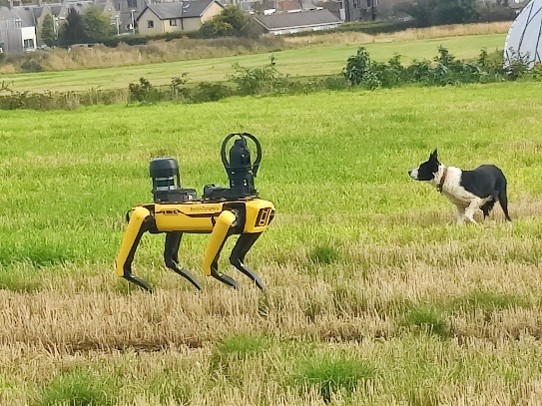
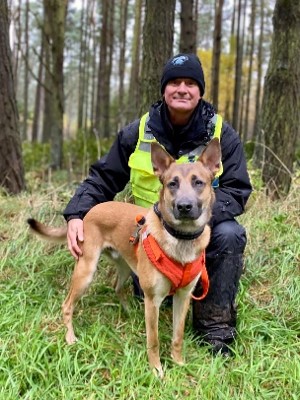
K9 Manhunt & ScentWork Scotland
When plant tissue becomes infected, metabolic changes often produce altered scent signatures. Detection dogs are capable of
detecting extremely small concentrations of scent molecules, and the concept K9 Manhunt & ScentWork Scotland is exploring is
whether canine scent detection could potentially act as a rapid screening tool to help identify suspect potato samples for further
laboratory analysis. See this trialed live at Potatoes in Practice.

- Static machinery - Explore the latest range of static machinery from leading dealers.
- BASIS Knowledge Trail - Visitors to Potatoes in Practice 2026, who are members BASIS or NRoSO, can enhance their professional development and earn up to 6 CPD points at the event. Visit the BASIS stand on the day to pick up your stamp cards and for more information.
Live cookery demonstration - For the first time, Potatoes in Practice will include a live cookery demonstration by Sarah Rankin, former MasterChef finalist and now a well-established food writer, broadcaster and private chef. A passionate advocate of local produce and food made with love, Sarah’s potato-based dishes promise to inspire visitors and highlight the versatility and value of this staple crop.

Join Sarah at 12:30 in our social marquee for a live cookery demonstration
________________________________________________________________________________________________
Seminar programme
This year’s seminar programme supports the theme future-proofing the potato industry, and brings together leading researchers, industry experts and growers to share knowledge, address the key challenges and opportunities facing the sector and help drive progress.
The seminars provide a platform for experts to present the latest research, innovations and practical solutions that will equip attendees with ideas to strengthen sustainability, productivity and resilience within their own businesses, vital at a time of increasing pressures from climate change, disease management, input costs, sustainability requirements and evolving consumer demands.
10.30 – 11.10 | Summaries from 5 years of PCN Action Scotland
11.30 – 12.10 | Leaf Roll virus and the challenges it poses for growers
13:30 – 14:10 | Managing water scarcity in a changing climate
14:30 – 15:10 | Policy, trade and growth
Summaries from 5 years of PCN Action Scotland
This seminar will cover grower-focused practical outputs from the Scottish Government funded PCN Action Scotland project, describing what an applied management strategy could resemble for sustainable PCN control in Scotland. This will cover the use of resistance, nematicides, cover/trap crops and strategies for planning ahead.
Practical outputs from PCN Action Scotland
Dr Kerry Leslie, SAC Consulting (SRUC)
Stewardship of PCN resistant varieties
Dr James Price, The James Hutton Institute
The UK is the 5th largest potato producer and exporter in Europe with an industry worth approximately £928 million at farmgate value and many billions in downstream industries. 77% of seed potatoes used in Great Britain originate from Scottish farms. However, this industry is under threat from potato cyst nematodes (PCN) which have been spreading across many UK potato growing areas for decades. Legislation in Scotland prevents seed potatoes from being grown on land where PCN have been detected. PCN are known to be present in almost 21,000 ha of Scottish soils. However, it is expected that approximately 35% (59,000 ha) of all Scottish potato land is infected with PCN.
Following a report in 2020, a Scottish Government PCN working group was initiated under the management of Scotland’s Plant Health Centre. This group, PCN Action Scotland, consisting of over 50 government, academic, and industry contributors from 9 key partners collaborating across 9 key work packages. In addition to core research, the group proposed new policy changes, created new tools to help growers with PCN management, and recommended incentives for improved PCN management to SASA. The initial PCN Action Scotland project has now finished. This presentation will provide an overview of the work, detailing grower-focussed practical outputs that can be implemented for sustainable PCN management.
________________________________________________________________________________________________
Leaf Roll virus and the challenges it poses for growers
Sponsored by SSCR ![]()
A grower-led discussion examining the challenges of maintaining high-quality seed production in the face of changing environmental conditions, increasing Potato Leaf Roll Virus (PLRV) pressure, limited virus control options, and the complexities of implementing integrated pest management (IPM). Followed by an audience-led discussion and Q&A.
Speakers/Panel Members:
Chair: Andy Steven, Agronomist and Chairman, SSCR Potatoes
- Alistair Melrose, Commercial Director Smillie Potato Grower’s and Past President of BPTA
- Ryan Torrie, Manager at JS Cruickshank Potatoes and Vice Chairman of PB Growers Association
- Jamie Harrison, Director of E G Harrison & Co and HDF Farming Ltd
________________________________________________________________________________________________
Managing water scarcity in a changing climate
In a changing climate, Scotland's water demands and availability are changing, we discuss the value of water, decision support systems for irrigation scheduling and practical farmer guidance to build resilience.
Changing climate, water demand, and availability
Kerr Adams, Hutton Scientific Services (HSS)
This session will explore how Scotland’s changing climate is expected to affect potato production, with a particular focus on the growing importance of valuing and managing water resources. Drawing on modelling and research from Hutton Scientific Services (HSS), the presentation will demonstrate how potato crop water demand can be assessed to support future planning and resilient production. A case study from a catchment in Fife will provide a practical example of how water demand can be quantified and managed at a local scale.
Decision support systems for irrigation scheduling
Peter Raatjes, Director of RMA Company
This session will showcase the RMA/Agrii in-field weather station and soil moisture probe technologies, demonstrating how real-time, location-specific weather and soil moisture data can support informed decision-making and optimise potato irrigation scheduling. It will also highlight how analysing environmental trends enables more efficient water use and provides growers with the data-driven insights needed to improve crop management and resilience.
Practical farmer guidance, highlighting recent water scarcity document
Gavin Prentice, SAC Consulting
This talk will provide an overview of the guidance, bringing together the key themes covered throughout this session and demonstrating how to assess water risk by considering hazard, exposure and vulnerability. The session should also explore efficient irrigation practices (where these have not already been covered) and highlight practical approaches to building resilience to water scarcity.
________________________________________________________________________________________________
Policy, trade and growth
This seminar explores the strategic, policy and regulatory developments shaping the future of the potato sector. Presentations will examine the roadmap emerging from the Potato Industry Growth Summit to achieve 25% profitable growth, alongside UK–EU trade developments and the evolving regulatory framework for precision breeding.
A Roadmap to Deliver 25% Profitable Growth
Alex Godfrey, GB Potatoes
The session opens with Alex Godfrey, who will present the conclusions of the Potato Industry Growth Summit, which brought together growers, processors, retailers, researchers, policymakers and the wider supply chain to develop a shared roadmap for delivering 25% profitable growth across the GB potato sector. Rather than focusing solely on increasing production, the summit defined profitable growth as improving productivity, resilience, margins and value throughout the supply chain. Alex will discuss some of the key themes emerging from the summit, including securing water resources, stimulating consumer demand, accelerating variety development, strengthening plant health, restoring grower confidence, increasing innovation and productivity, developing future skills, and creating a coordinated industry and policy framework. He will also outline the practical actions identified for industry, government and the research community to translate these ambitions into a deliverable growth strategy.
Shaping the Future: Trade and Precision Breeding
Gerard Croft, BPTA
The second presentation, by Gerard Croft, will examine the regulatory implications of a potential re-opening of seed potato trade between the UK and the European Union. He will consider how restoring market access could require the UK to dynamically align with aspects of current and future EU legislation, and the implications this may have for the potato sector. This includes existing areas of regulatory divergence, such as pesticides and precision breeding (New Genomic Techniques), as well as forthcoming EU measures, including proposed sustainability requirements within Value for Cultivation and Use (VCU) testing and changes to permitted glycoalkaloid and acrylamide levels. Gerard will discuss how these developments could influence research, innovation, variety development and future market access.
Together, these presentations will provide delegates with valuable insights into the strategic roadmap, policy environment and regulatory changes that are likely to underpin the next phase of growth, innovation and international competitiveness for the potato industry.